
Relational Living with the Smalls
Adventures in Microanimism
FOUR TUESDAYS
BEGINNING MARCH 24
8am Los Angeles | 11am New York | 5pm Berlin
About the Course
Seeking the sacred in grand displays is one approach, and this course turns toward what is quiet and often overlooked. This four-part series honors the unseen engineers of continuity, the small ones holding the scaffolding of life, our most ancient collaborators and kin, sustaining life through constant, unseen labor. Like the ancestors and other collective forces who often work outside our conscious gaze, microorganisms profoundly shape patterns of belonging and coexistence. By turning attention to their reality and our interdependence, we can expand our sense of the sacred in ways that are even more relational, participatory, and deeply alive.
This course is for those who find meaning in systems, humility in science, and spirit in quiet places. Those who understand what it means to be powerful, underestimated, and overlooked.
About the Course
Intuition and connection to older ways of knowing can feel antagonistic to materialism and modernity. So many of our cultural systems and ways of life encourage numbness and disconnection from the sensorial, the imaginal, and deep feeling. For harmful systems to thrive, multi-dimensional ways of knowing and living must be repressed.
This course invites repair by nurturing an ecology where intuition can live and thrive through steady practice.
We’ll take a clear-eyed look at intuition as an ancestral strategy for becoming a thriving participant in the living world. Our focus will be to gently unravel the repression that severs us from our innate capacity to sense, feel, and know. We’ll cultivate ways to support a healthy, integrated relationship with visions, dreams, voices, inspired speech, and the quiet sensing of the body—our soma as an antenna in dialogue with the living world.
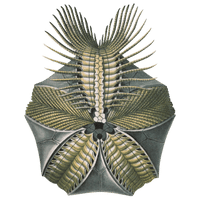
Deepen capacity for humility, attentiveness, and relational awareness in how you engage with the living world.
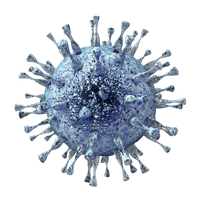
Develop ethical frameworks for relating with unseen life that balances respect, responsibility, and human health.
Increase your felt appreciation and awe for how immersed we are, moment to moment, in the thriving, surging, unfolding of life on Earth.
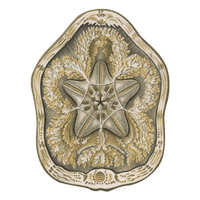
Explore more porous approaches to identity, including how bodies function as shared ecosystems rather than closed systems.
Cultivate a felt sense of belonging within wider ecological and microbial communities, expanding connection beyond the personal or human scale.
Course Overview
Contemporary science continues to reveal a quiet truth: much of what sustains life happens beyond notice. Oceans, forests, deserts, and urban landscapes: entire ecosystems depend on microbial worlds whose labor is constant, intimate, and largely unseen. These forces rarely draw attention, but nothing functions without them.
This course invites a way of acknowledging and encountering the sacred by placing attention on those who are easily overlooked.
As with many of the forces that move and shape our world, the least acknowledged do the lion’s share of the work.
Cyanobacteria steady oceans and atmospheres, quietly feeding vast food webs and breathing oxygen into the planet. Enzymes act as molecular midwives, making reactions possible that would never occur on their own. Not unlike our human ancestors: they are rarely loud, less often linear, but capable of orienting lives, transmitting memory, and subtly shaping the conditions in which we heal, choose, and belong.
By attuning with what is unseen but consequential, we cultivate connection rooted not in scale or spectacle, but in quiet influence, ethical relationship, and deep participation in the living systems that make life possible.
With this tenderly placed attention, we may come to know ourselves, our world, and divine influence with deeper appreciation and intimacy.

Four live teaching calls with Siv Watkins and guests

12+ carefully curated resources to accompany lessons
Unlimited access to recordings and course materials

Access to a dedicated community discussion space
Course Curriculum
1
2
3
4
Lesson One: A Kaleidoscopic Universe
- Appreciate the complexity of single-celled and acellular biology
- Explore your personal ‘in’ with the larger microbial community
- Discuss the limits of scientific inquiry and the edge of knowing
- Practice turning mindful attention to near-to-you microbial kin
Lesson Two: Fermentation, Food, and Beauty
- Explore the role of the smalls in tasty, healthy, inspired eating
- Reflect on the ways our vocations coweave with the smalls
- Consider microorganisms in relation to beauty, joy, and love
- Practice directly thanking those upon whose lives we depend
Lesson Three: Microbial Planet
- Learn of the ubiquitous nature of the smalls through time and space
- Discuss ways to navigate our extended microbial environment
- Explore the smalls and their unfolding relationship with the Earth
- Practice visualizing and embodying something like microbial time
Lesson Four: Complications of Being Human
- Discuss etiquette and ritual safety when engaging microorganisms
- Learn about the roles of the smalls who associate with human hosts
- Expand on ideas of microbial intrusion, danger, and dependence
- Practice witnessing the diversely impactful smalls that live with you


Lesson One: A Kaleidoscopic Universe
- Appreciate the complexity of single-celled and acellular biology
- Explore your personal ‘in’ with the larger microbial community
- Discuss the limits of scientific inquiry and the edge of knowing
- Practice turning mindful attention to near-to-you microbial kin
Lesson Two: Fermentation, Food, and Beauty
- Explore the role of the smalls in tasty, healthy, inspired eating
- Reflect on the ways our vocations coweave with the smalls
- Consider microorganisms in relation to beauty, joy, and love
- Practice directly thanking those upon whose lives we depend
Lesson Three: Microbial Planet
- Learn of the ubiquitous nature of the smalls through time and space
- Discuss ways to navigate our extended microbial environment
- Explore the smalls and their unfolding relationship with the Earth
- Practice visualizing and embodying something like microbial time
Lesson Four: Further Complications Being a Human
- Discuss etiquette and ritual safety when engaging microorganisms
- Learn about the roles of the smalls who associate with human hosts
- Expand on ideas of microbial intrusion, danger, and dependence
- Practice witnessing the diversely impactful smalls that live with you
Waitlist for Microanimism
Register for Microanimism
3 and 6 month payment plans available at checkout at 0% interest.
Supporter
$
195
USD
-
This rate helps us make our work accessible to those with modest means and applies if you have investments, a retirement plan, and/or access to economic abundance.
Register Now
3- and 6-month payment plans are available during checkout.
Standard
$
165
USD
-
Our standard rate allows us to sustain our work. This typically applies if you’re employed in the Global North, and you’re able to provide for your needs in a consistent way.
Register Now
3- and 6-month payment plans are available during checkout.
Reduced
$
135
USD
-
This rate applies if you’re relatively less economically advantaged in the ways listed under “standard rate” or that cost is simply out of reach for you financially.
Register Now
3- and 6-month payment plans are available during checkout.

Course Schedule
FOUR TEACHING CALLS WITH SIV AND GUESTS
- Four Tuesdays | March 24, March 31, April 7, April 14.
- David Zilber will join for call #2 on the 31st and a second guest (still TBD) for the call on April 7th.
- 8am Los Angeles | 11am New York | 17:00 Berlin
CLASS STRUCTURE
Each live session (90 minutes total) will include teaching or co-teaching, guided practice, and live Q&A with the instructors. All calls will be recorded and available in your course dashboard indefinitely. Look for recordings 24 hours after the live call.
Who are “the smalls”?
There are few truly systems-based approaches to engaging with the animate world than consideration of the microbial universe. Our components of being–the inspired, the mundane, the living, the dead–are all infused by the presence and influence of the smalls.
The first observations of microbes using early microscopes happened in the 1670s, but the smalls of Earth have been around for at least 3.5 billion years. Contemporary bacteria, viruses and archaea follow an ancestral thread back to the start of life on Earth. Within this trail of deep ancestry, the smalls are innately braided through our lineages, deities, food, drink, soil, disease, and our very death.
How do the smalls impact us?
Science continues to uncover how pivotal the smalls are to the stability of entire ecosystems. Nothing runs without the say-so of the smallest ones, including our own human bodies. The physiological processes that keep us alive rely on the activities of microorganisms that live among our own cells. Capillary function, pheromone responsiveness, chemical signaling: we are composite beings which invokes a variety of implication and complication. As they outnumber the cells of our very body, making us more “them” than “us”, we can rightly ask if we’re humans having a microbial experience, or a microbial swarm having a human experience.
Ethics of Microanimism
Turning attention toward the unseen world has real consequences, and people will experience this turn of attention in different ways. This course explores how to develop a personal relationship with micro-scale life while staying grounded in a systems-level understanding. It also addresses how to move through this territory with care. Ethical questions naturally arise when the boundaries of the physical self are porous and relational rather than discreet and fixed.
- What does respect mean when relating to beings that are invisible to us, myriad, and so collective in their consciousness?
- When does “relationship” become projection or anthropomorphism?
- When is it appropriate to interfere with, alter, or eradicate microbial life (e.g., antibiotics, sanitization, ritual cleansing)?
- How do we weigh human health and safety against the well-being of microbial ecosystems?
About the Instructors
Siv Watkins, Ph.D
Siobhán Watkins is an academically trained microbiologist, artist and essayist, and the founder of Microanimism. Microanimism, first as a personal philosophical exploration of the author’s relationship with the smalls, came into in 2018, and Siv has been writing poems about phlegm ever since. Siv has held professional positions in scientific industry, academic research and teaching since 2003. She has studied communities of viruses and bacteria in wastewater treatment systems, conservation microbiology, and freshwater pollution.
In 2016, Siv became a student of ritual technology. She is interested in exploring how ancientness, challenge and initiation act as interfaces between microbes and humans and helps people explore these themes, among others. She believes empowerment through science education is activism. Originally from the UK and proudly working-class, Siv now lives in Albuquerque, New Mexico where she teaches biology at a local community college.

David Zilber
David Zilber is a professional chef, fermenter, food scientist, and author hailing from Toronto, Canada. He has worked in some of the world’s top kitchens since 2004, most notably serving as the director of the world renowned Fermentation Lab at Restaurant Noma, where he employed fungi and bacteria to transform foodstuffs into bold new ingredients. In his time there, he authored the New York Times bestseller, The Noma Guide to Fermentation. Through his passion for the sciences and the arts, he has become a voice for science communication for a new generation of cooks and enthusiasts in the world of food and fermentation. His love of sharing knowledge has led him to teach and lecture at the likes of Harvard, Cambridge, and Stanford, and the University for Gastronomic Sciences. He currently works in Copenhagen as a food scientist within Novonesis on the frontiers of flavour and innovation, employing the help of microbes to build a more just and sustainable food system for all.

Frequently Asked Questions
Main Teaching Calls | 90 min | Tuesdays
8am Los Angeles | 11am New York | 5pm Berlin
* See exceptions below
Call 1: March 24
Call 2: March 31*
Call 3: April 7*
Call 4: April 14*
*Central Europe Time moves ahead one hour beginning with our March 31 class due to the start of daylight savings. As a result, the first call in Central Europe will be at 4pm (16:00), and all following calls will be held at 5pm (17:00) local time. The North American times are stable.
The timing of the main calls favor participants in the Americas, Africa, Europe, and West Asia. Thanks to our international community of learners for your understanding around the challenges of time-zone inclusivity. All who register get lifetime access to recordings, and you’re welcome to send in questions for our teaching team to answer during live calls or in written form.
No, not at all. The only requirement to attend is curiosity about relating more deeply with the smalls. And if you happen to have a science background, you’ll be in the good company of a witty, down-to-Earth doctor of microbiology.
To the very best of our ability, yes. All Ancestral Medicine offerings seek to embody an anti-racist, feminist, LGBTQ-celebrating, decolonizing, and Earth-honoring ethic. They are also class-aware and internationally conscious. We offer a heartfelt, non-dogmatic approach that seeks to honor each participant’s unique life experiences and ancestral storylines. Resources included with each lesson favor ancestrally and geographically diverse voices.
All our live calls are held via Zoom. Shortly after you register, you’ll receive a welcome email with instructions for locating this event – and its call information – in your Ancestral Medicine account. There’s no need to wait for that email, however. Registration automatically enrolls your Ancestral Medicine account in the event and places it in your Student Dashboard.
All live teaching calls will be recorded and made available 24 hours later in the course portal to watch and listen to at your leisure, with indefinite access.
All of our lesson videos have auto-generated English subtitles, as well as downloadable audio-only versions of the lessons. If you have needs not met here, please feel free to reach out to us with suggestions at info@ancestralmedicine.org.
Should you wish to withdraw from a live online course or shift your registration to a future iteration, please contact us at info@ancestralmedicine.org to request a full refund within the refund window of that specific course. For this course, you can request a refund before the second session begins. After this, no refunds will be offered.
Have a question that’s not answered here?